
Best Driveway Pressure Washing in Edina, MN
Salt-stained concrete, rust rings from a planter, oil from a leaking transmission - your driveway tells everyone who pulls up what kind of year it has had.
TL;DR - Driveway pressure washing in Edina is a chemistry job as much as a pressure job. The surface material, the stain type, and what gets done after the wash all matter more than how hot the wand is.
A clean driveway changes how a house presents from the curb in a way nothing else does at the same price point. The roofline can be perfect, the landscaping fresh, the trim recently painted - and a stained driveway still drags the whole front of the property down.
Driveway work is one piece of the broader pressure washing services JVN Exteriors handles in Edina. The driveway-specific piece comes down to three things: knowing the material, treating the stain before the wash, and protecting the surface after.
Learn more about JVN Exteriors and our work for homeowners and businesses across Edina and the Twin Cities.
Concrete, Pavers, and Asphalt Need Different Hands
Most Edina driveways are poured concrete, but the Country Club District and a few older Indian Hills homes have brick or clay pavers, and asphalt shows up across the postwar streets around Pamela Park.
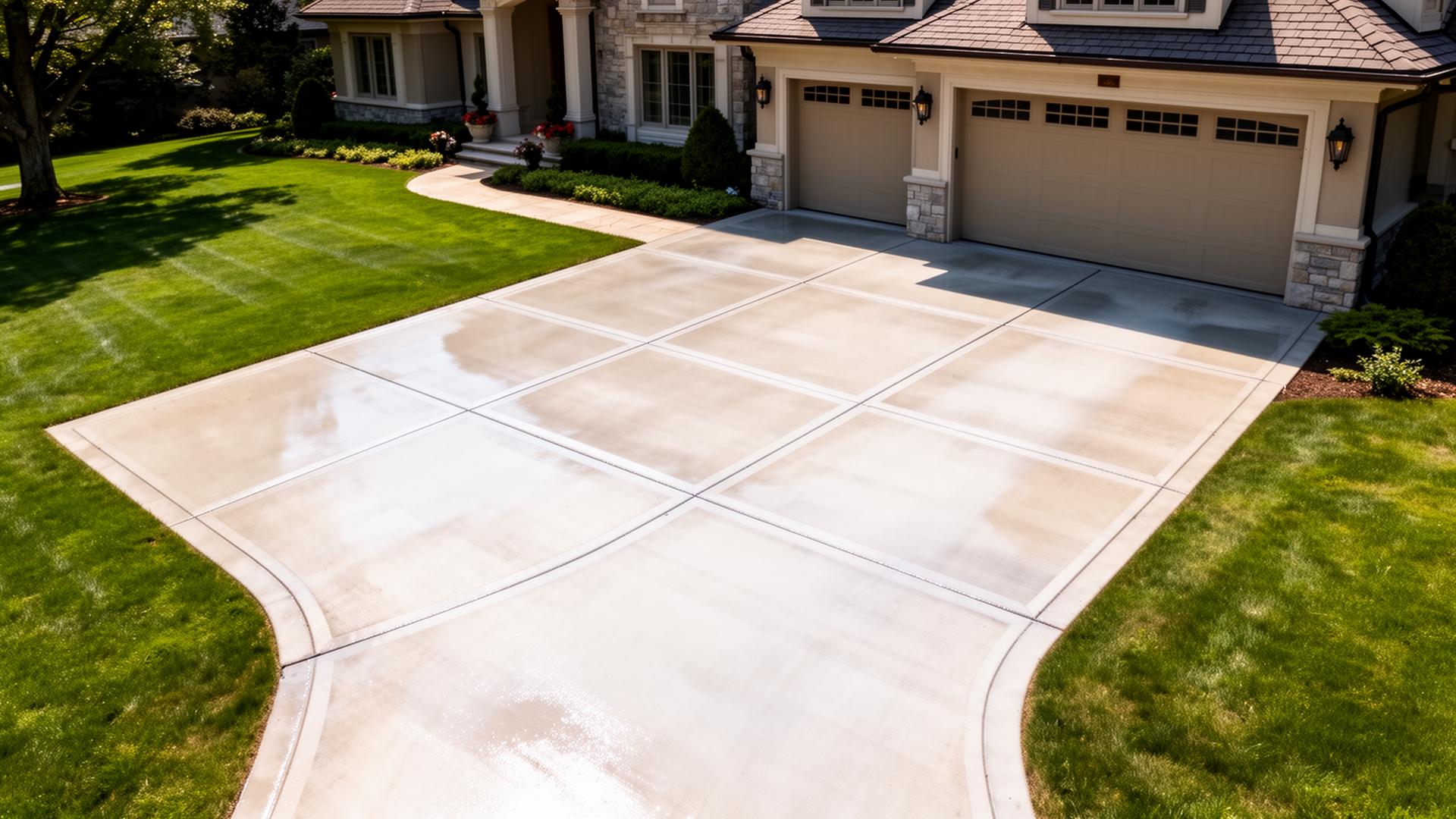
Concrete tolerates a surface cleaner attachment, which spins two wands under a shroud to lay a uniform pattern across the slab. Without that attachment, an open wand leaves visible stripes that get worse the longer the driveway sits in the sun.
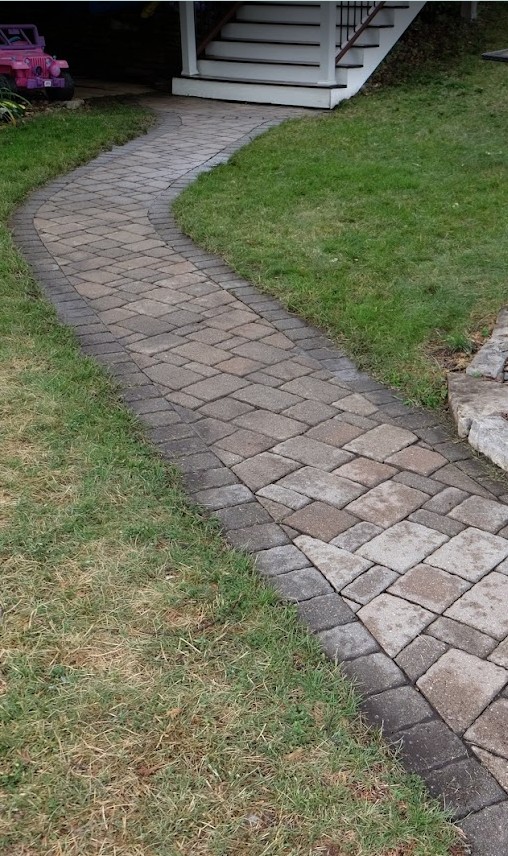
Pavers are a different conversation. The same pressure that cleans concrete blows polymeric sand out of the joints, and once the sand is gone the pavers start to shift. Pavers get a softer wash and the joints get re-sanded after.
Asphalt is the most fragile of the three. High pressure tears the binder out and accelerates the surface failure that asphalt is already prone to in Minnesota's freeze-thaw climate. Asphalt gets the lowest pressure and a softer chemical lift.
Oil, Rust, and Tire Marks Are All Different Problems
Pressure alone does not remove most driveway stains. Surface cleaning lifts loose dirt and biological growth. Embedded stains need pretreatment with the right chemistry.
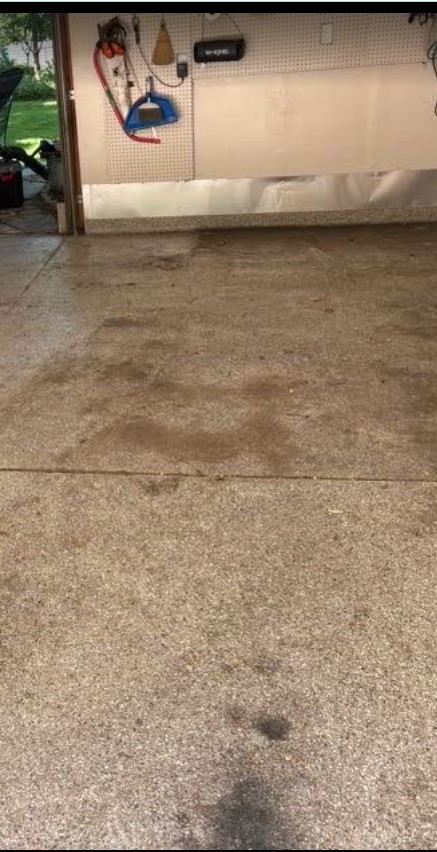
Oil and transmission fluid sit in the pores of concrete. We pretreat with a degreaser that pulls the petroleum back out of the surface, let it dwell, then wash. Skipping the degreaser just smears the stain into a wider footprint.
Rust from a planter, a bike chain, or rebar in the slab needs an oxalic acid product. Standard pressure washing chemistry will not touch rust, and chlorine-based cleaners actually make rust worse by oxidizing the iron further.
Tire marks - that black scuff from sharp turns into the driveway - are plasticizer migration, not dirt. They need a citrus-based degreaser and a stiff brush worked by hand before the wash starts.
Minnesota Salt, Efflorescence, and What to Do After
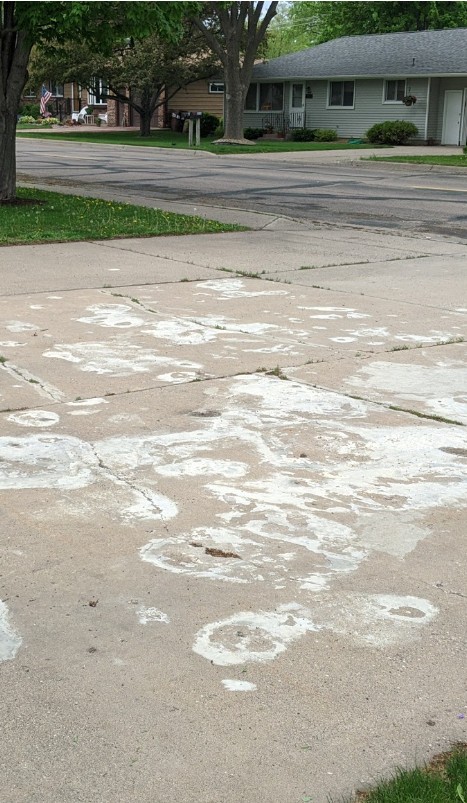
The road spray off Highway 100 and Crosstown 62 pulls a winter's worth of salt into every driveway in the area. By April that salt has wicked into the slab and is pulling minerals to the surface as a white, chalky efflorescence that most homeowners assume is just dirt.
Efflorescence is a sign the slab is actively releasing moisture, which means it is also actively absorbing whatever else lands on it. Washing in spring resets the surface before another summer of stains gets locked in.
After the wash, concrete in good condition benefits from a penetrating sealer. The sealer fills the pores and stops oil, rust, and salt from soaking back in. We can recommend a sealer schedule based on the slab's age and condition.
For driveways that are heavily cracked or spalling, sealing is not the right call - the slab needs repair work first. We will say so on site before quoting a service that would not last.
FAQ: Driveway Pressure Washing in Edina, MN
Ready to See Your Driveway Look New Again?
Stain pretreatment, the right pressure for the material, and a clean that holds up through a Minnesota summer.