Best Wood Painting in Edina, MN
Dated oak cabinets, a builder-grade vanity, or stair railings that have not been touched in twenty years? Painting wood features is one of the most cost-effective ways to change how a home looks without replacing anything.
TL;DR - Wood painting in Edina, MN means cabinets, vanities, and stair railwork. These surfaces take more prep and more precision than wall painting. JVN Exteriors treats every wood feature as a finish carpentry project, not a paint-and-move-on job.
Painting wood trim and built-in features is different from painting walls. The surfaces are smaller, more detailed, and more visible up close. A brush mark on a cabinet door or a drip on a stair baluster is immediately noticeable in a way that a small imperfection on a bedroom wall never is.
Done right, painted cabinets look factory-finished. Done in a hurry, they look exactly like what they are. Wood painting is one part of the full range of painting services JVN Exteriors provides in Edina.
Learn more about JVN Exteriors and our work for homeowners and businesses across Edina and the Twin Cities.
Painting Kitchen Cabinets and Bath Vanities
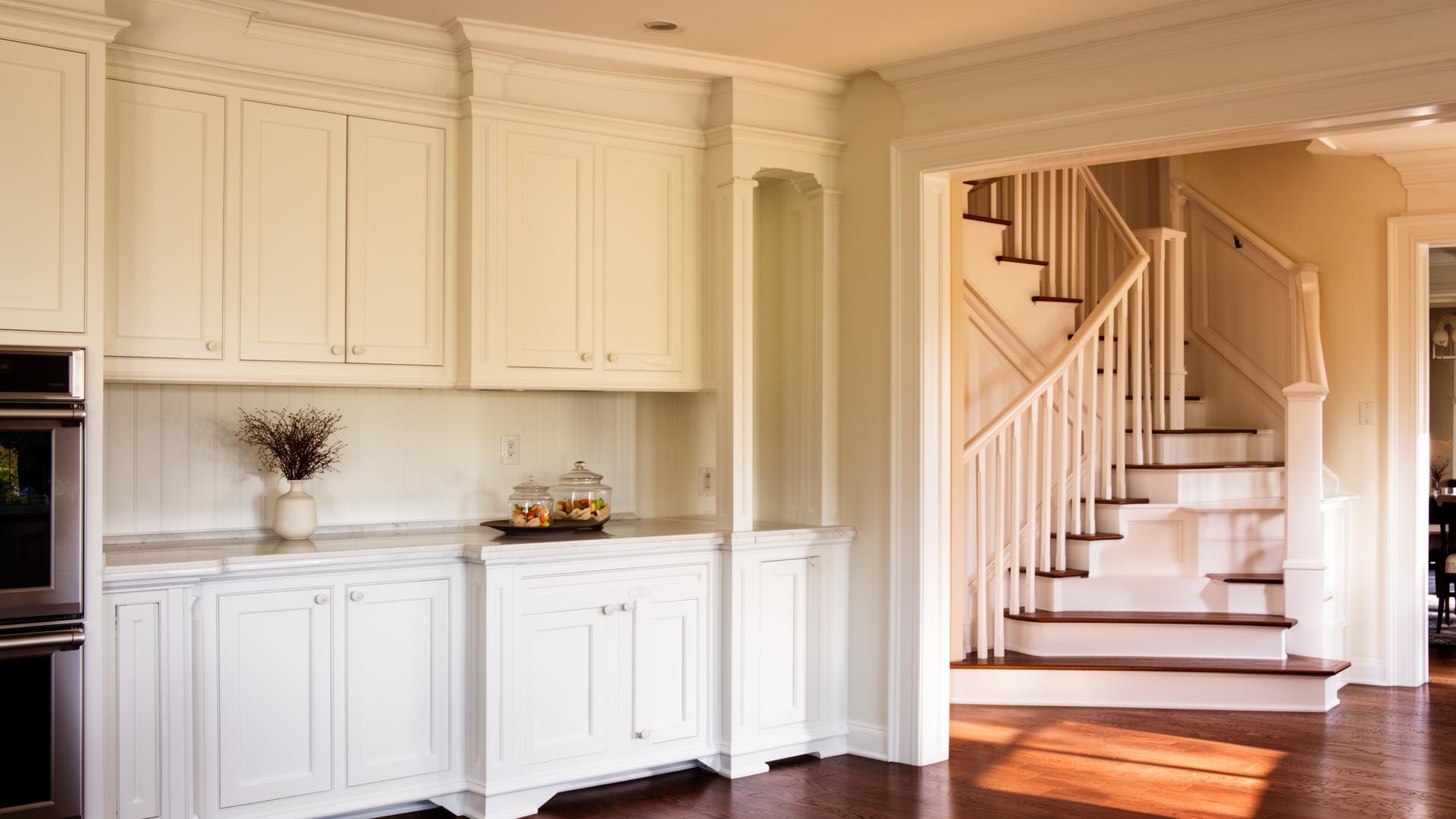
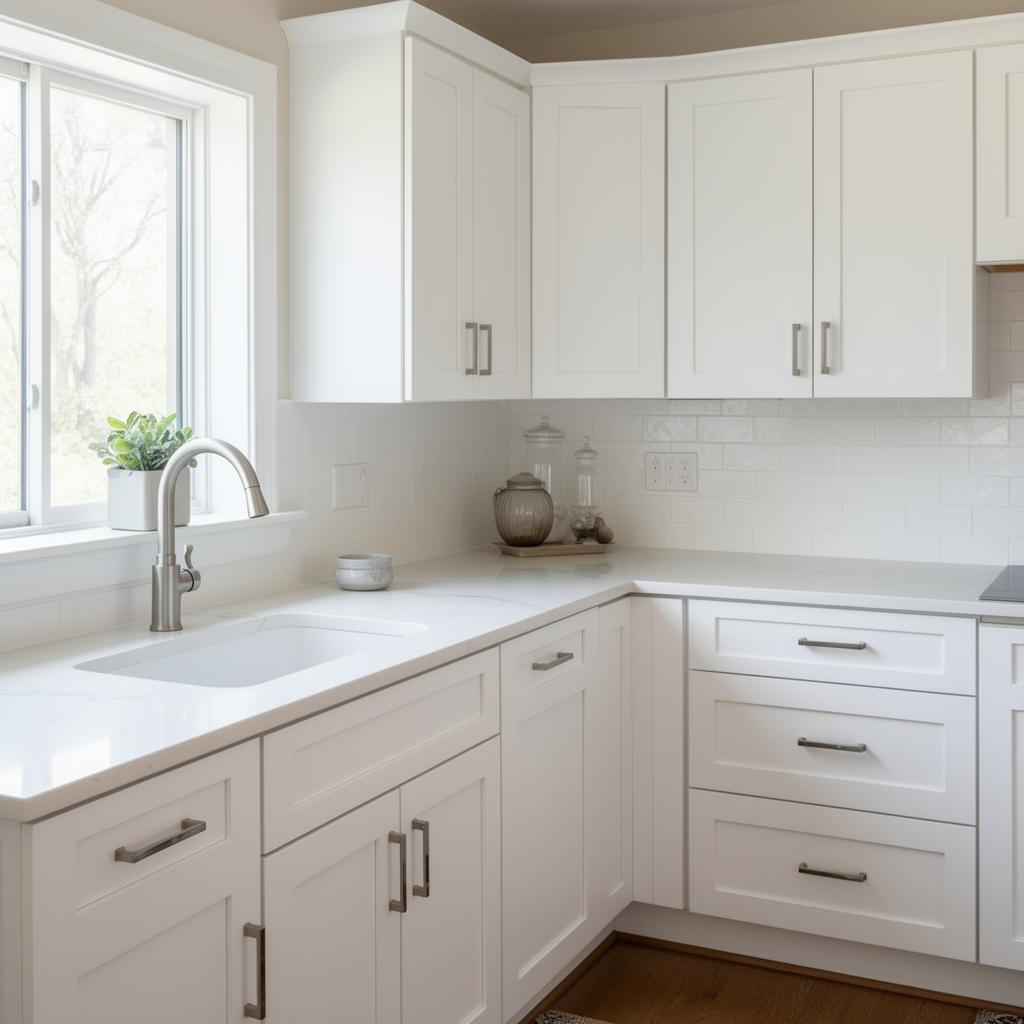
Cabinet painting is the project Edina homeowners ask about most when they want to change the feel of a kitchen or bathroom without the cost and disruption of a full remodel.
Solid wood cabinet boxes built in the 1980s and 1990s are excellent candidates for painting. The construction is often better than what comes in new stock cabinetry, and the only thing that needs updating is the finish and sometimes the hardware.
The process matters far more than the product. Cabinet doors and drawer fronts come off and get painted separately so edges get full coverage and nothing drips onto a lower surface. Every surface gets cleaned to remove grease and cooking residue, then scuff sanded so the primer bonds properly. Bare wood edges and any raw spots get spot-primed before the full coat goes on.
JVN Exteriors sprays cabinet doors and drawer fronts for a smooth, even finish free of brush marks. Box interiors and face frames get brushed and rolled carefully. The result is a finish that looks like it came from a cabinet shop, not a paint can.
Bath vanities follow the same process. The scale is smaller but the precision requirement is the same.
Stair Railings, Balusters, and Newel Posts
Stair railwork is the most detail-intensive wood painting project in most homes, and it is one that makes a significant difference in how an entryway or main stair feels.
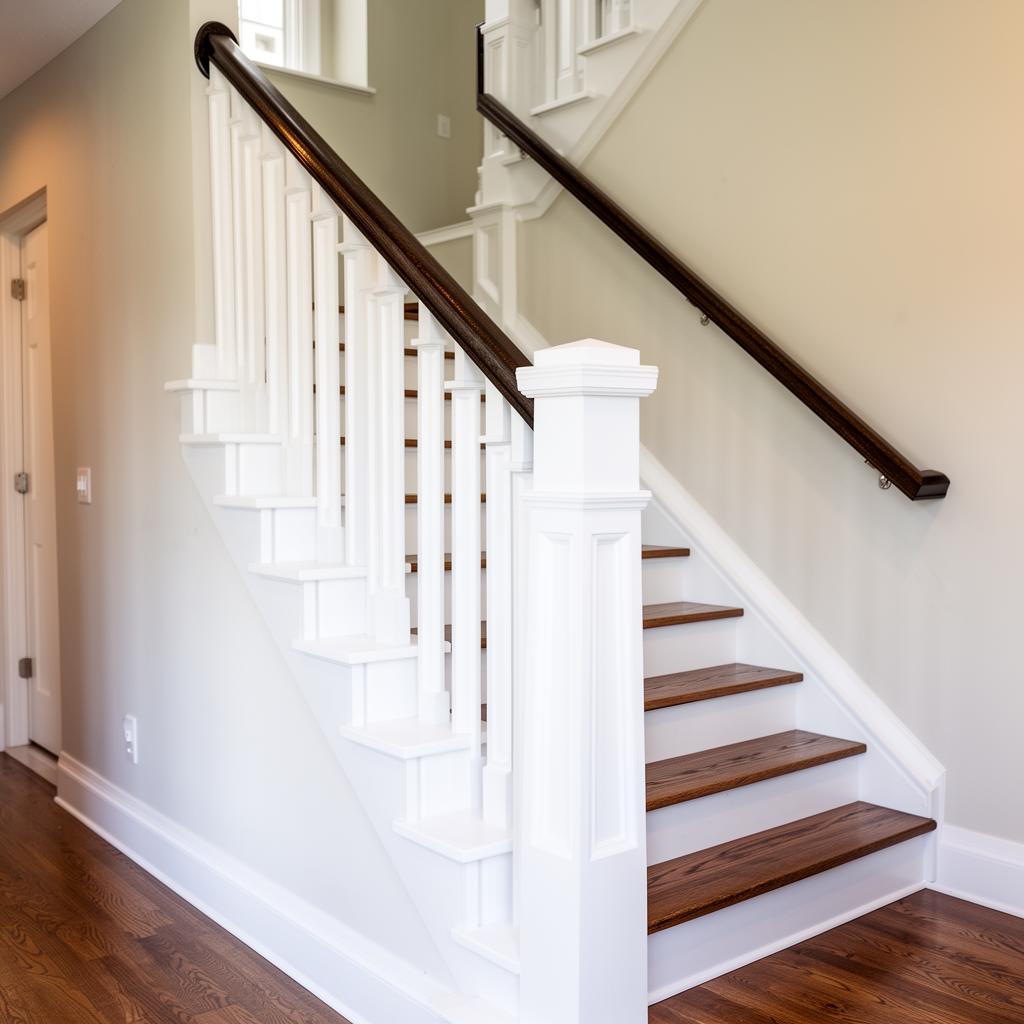
A typical stair system has a handrail, a newel post, and a row of balusters. Each of those surfaces has a different profile, a different amount of contact, and often benefits from a different color. White balusters with a dark stained or painted handrail is a combination that reads clean and current in most home styles.
Every baluster gets painted individually. There is no way to shortcut that work and get a result that looks right from close up. JVN Exteriors tapes off treads and surrounding surfaces, works methodically through each component, and applies multiple thin coats rather than one heavy coat that runs and sags.
Newel posts take the most contact of any railing component. The paint finish on a newel post needs to be durable enough to hold up to daily handling, which means the right primer, the right topcoat, and enough dry time between coats.
Getting Wood Ready for Paint
Wood requires specific prep that wall surfaces do not, and skipping any part of it shows in the finished result.
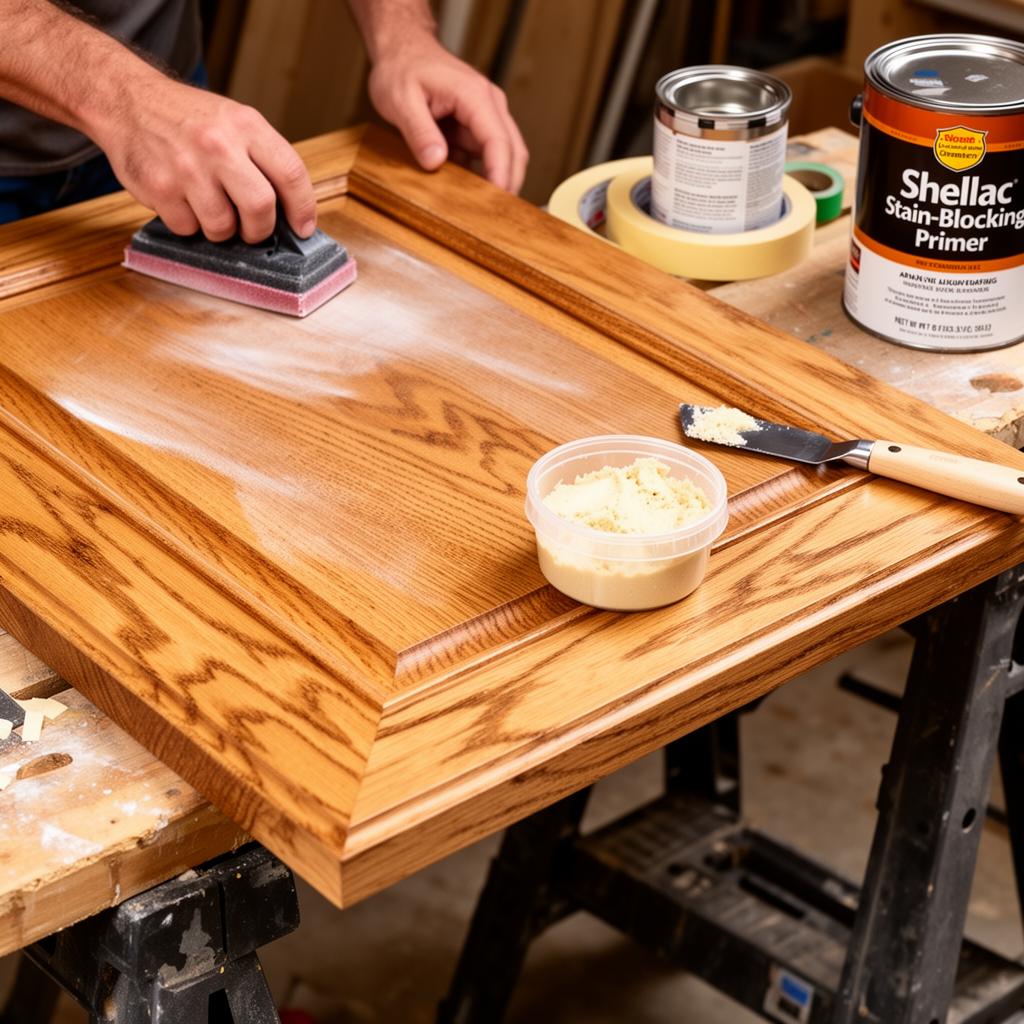
Glossy existing finishes have to be dulled before paint will bond. Liquid deglosser or scuff sanding breaks the surface so primer adheres rather than peeling away later. Certain wood species, particularly oak and cherry, have open grain that reads through paint as a rough texture if it is not filled first. Grain filler applied before priming gives a smoother finished surface.
Knots and tannin-rich wood can bleed through standard primer and discolor the topcoat over time. A shellac-based or stain-blocking primer applied to those areas prevents bleed-through before it becomes a problem.
These are the steps that home improvement videos tend to skip. They are also the steps that determine whether a painted wood feature holds up for three years or ten.
FAQ: Wood Painting in Edina, MN
Ready to Refresh Your Wood Features?
Cabinet painting, vanity refinishing, and stair railwork done with finish-carpentry precision by JVN Exteriors in Edina, MN.